
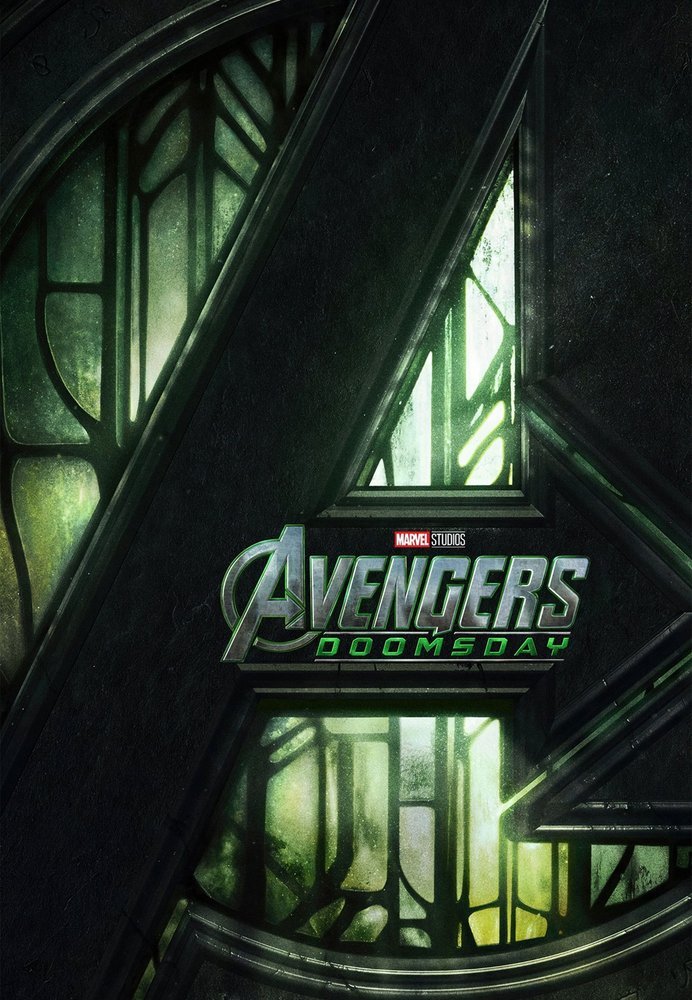
Doom is coming.
That is not a tagline. It is not hyperbole. After years of build-up, false starts, a mid-construction collapse, and one of the most shocking creative pivots in blockbuster history, the Marvel Cinematic Universe’s most powerful villain — the genius-tyrant sorcerer-scientist in the iron mask who has dominated Marvel Comics for sixty years — is finally stepping into the MCU. He arrives December 18, 2026, wearing the face of the man who built this universe. And he intends to remake it in his own image.
Avengers: Doomsday is the 39th film in the Marvel Cinematic Universe. It is the second film of Phase Six and the opening chapter of what Marvel is calling the conclusion of the Multiverse Saga. It is directed by Anthony and Joe Russo — the brothers who gave us the two highest-grossing MCU films ever made, Infinity War and Endgame — and written by Stephen McFeely and Michael Waldron. It stars an ensemble that, by sheer accumulated cultural weight, may be the most staggering ever assembled for a single film.
And at the centre of it, filling the vacuum left by Thanos with something arguably more dangerous — not brute cosmic force, but cold, absolute intelligence and will — is Robert Downey Jr., returning to the franchise he made, playing not the man who saved the universe but the one who wants to rule it.
HOW WE GOT HERE: THE ROAD TO DOOMSDAY
The story of how Avengers: Doomsday came to exist is almost as dramatic as anything likely to appear on screen. When Marvel announced in July 2022 that the fifth and sixth Avengers films would be titled The Kang Dynasty and Secret Wars, the plan seemed solid. Destin Daniel Cretton was hired to direct The Kang Dynasty, and Jonathan Majors — who had appeared as Kang the Conqueror in the Loki series and Ant-Man and the Wasp: Quantumania — was set to be the central villain of the entire Multiverse Saga.
Then, in late 2023, everything collapsed. Majors was arrested and subsequently convicted on assault charges. Marvel fired him. Suddenly, the entire carefully constructed Multiverse Saga had no villain. Jeff Loveness, who had written Quantumania and been hired to write The Kang Dynasty, departed. The studio was left with a franchise-scale problem: how do you replace the villain of four planned films and two Avengers movies when you’ve already built the entire saga’s architecture around him?
The answer, when it came, was audacious. Marvel Studios president Kevin Feige reached out to Robert Downey Jr. — not to resurrect Tony Stark, but to offer him the role of Victor von Doom, the character widely considered the greatest villain in Marvel Comics history. Downey said yes, but on one condition: the Russo Brothers had to come back as directors. McFeely, who had already been in conversations with the Russos about a new approach to the films, helped seal the deal. By July 2024, at San Diego Comic-Con, the announcement was made. The Hall H crowd, already buzzing from the event, erupted. Downey walked out in person to confirm the news. It was one of the great convention reveals in SDCC history.
Production began on April 28, 2025, at Pinewood Studios in Buckinghamshire, England, under the working title Apple Pie 1. The Russos filmed on fully enclosed soundstages to prevent leaks — “We’re pretty good about shutting that down,” Joe told Collider. “We’ve strategized to hopefully be effective with that.” Location work in Bahrain and at Windsor Great Park supplemented the studio shoot. Filming wrapped on September 19, 2025, with additional photography expected in early 2026.
“Downey said yes to playing Doctor Doom on one condition: the Russo Brothers had to return as directors. That condition was met. The rest is history.”
ROBERT DOWNEY JR. AS DOCTOR DOOM: THE MOST AUDACIOUS CASTING IN MCU HISTORY
Let’s be clear about what Marvel has done here. Tony Stark — Robert Downey Jr.’s Tony Stark — was the emotional heart of the Infinity Saga. For eleven years, across eleven films, Downey built a character so beloved that his death in Endgame reduced audiences worldwide to tears. “I am Iron Man” is one of the most iconic lines in blockbuster history. The snap that killed him is the defining sacrificial moment of the entire MCU.
And now, that same face — that same voice, that same intelligence, that same commanding screen presence — is going to be the villain. Not a hero returning in a new form. The villain. The man the Avengers assemble to fight.
Joe Russo has described Doctor Doom as “three-dimensional and one of the most complex comic book characters” ever created, and said Downey was “the one person who could take on the role.” Downey himself has reportedly developed an entirely original backstory for Victor von Doom to fuel his performance, and contributed ideas for the costume design. The great unanswered question — whether Victor von Doom is a variant of Tony Stark, or an entirely separate character who merely shares his face — is one Marvel appears to be keeping as a core mystery of the film itself.
In the comics, Victor von Doom is the ruler of the Eastern European nation of Latveria: a genius polymath who is simultaneously one of the world’s greatest scientists and one of its most powerful sorcerers, a man whose arrogance and brilliance exist in perfect, devastating equilibrium. He is not a nihilist. He does not want to destroy the universe. He wants to rule it. He genuinely believes, in the unshakeable conviction of his own genius, that the world would be better under his absolute control. That specificity of motive — not chaos, but order; not destruction, but dominion — is what makes him one of the great villains in any medium.
As Rotten Tomatoes summarised the character’s likely arc: “Doom spies other realities to rule, presumably having conquered his own. As the film will introduce him in the Multiverse context, we will also learn what sort of Doom the heroes of the MCU will face.” And the speculation about his ultimate goal points toward Avengers: Secret Wars, the 2027 sequel — in which the source comic’s Doom literally becomes the ruler of the single surviving reality after the collapse of the Multiverse. If that is where this is heading, Doomsday is not the climax. It is the beginning.
THE FULL ASSEMBLED CAST: EVERY HERO, TEAM AND FACTION
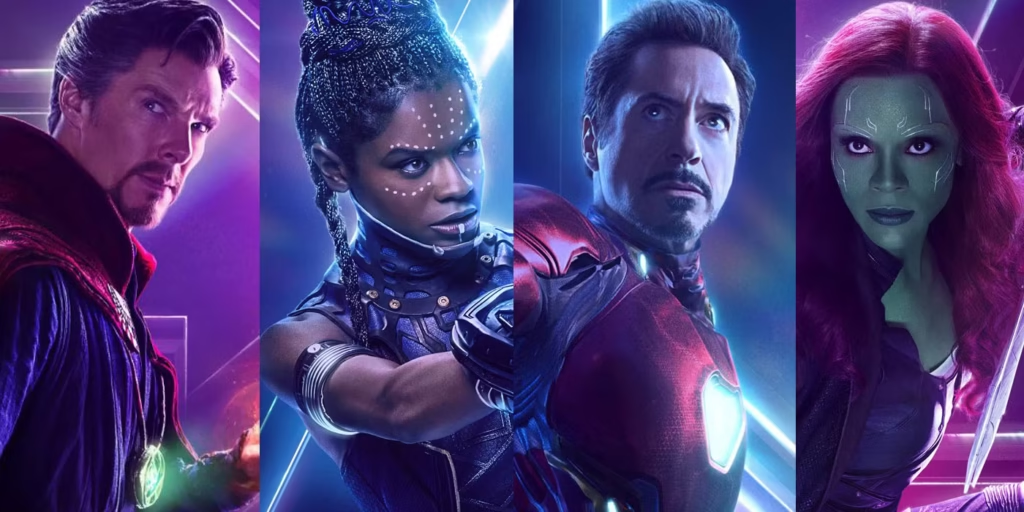
The Avengers: Doomsday ensemble is, by any reasonable measure, the largest and most star-studded cast ever assembled for a single film. Marvel’s live production announcement in March 2025 — which revealed 26 confirmed cast members simultaneously via a livestream that broke Marvel records with 275 million views — was only the beginning. Feige confirmed more revelations were coming. Here is every confirmed faction and character:
THE HEROIC AVENGERS
Anthony Mackie — Sam Wilson / Captain America — the shield-bearer since Endgame, now leading the core Avengers team
Chris Hemsworth — Thor — shown in his teaser praying to Odin for strength to survive one last battle and return to his daughter Love
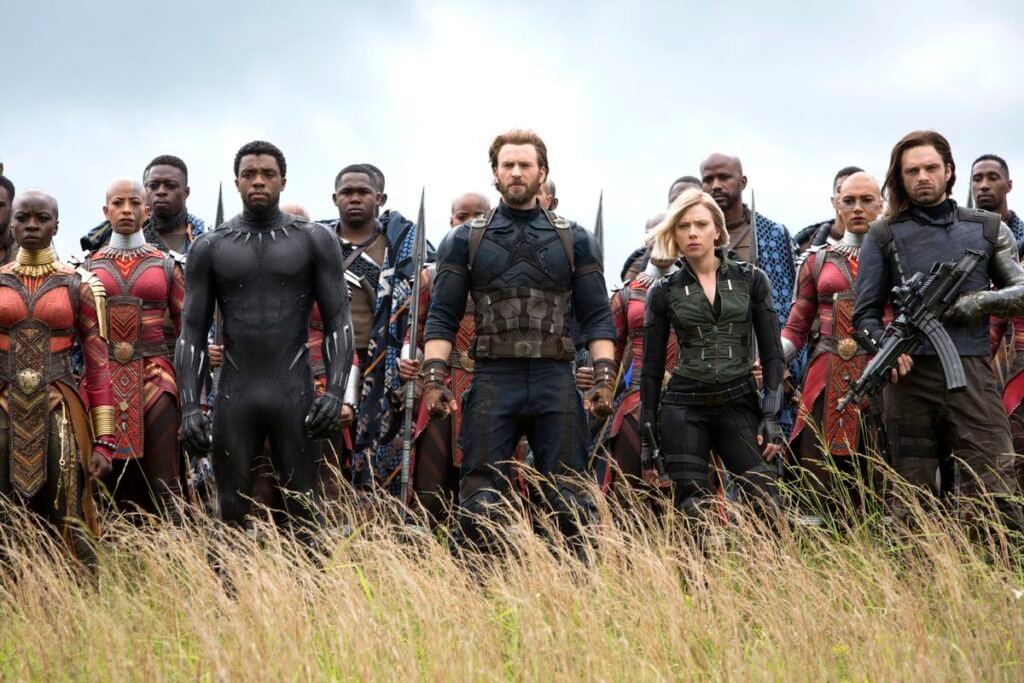
Sebastian Stan — Bucky Barnes / Winter Soldier
Paul Rudd — Scott Lang / Ant-Man
Simu Liu — Xu Shang-Chi
Danny Ramirez — Joaquín Torres / Falcon
Tom Hiddleston — Loki
Benedict Cumberbatch — Doctor Strange (confirmed after Evans stated he’d been “wrong” about Strange’s absence)
THE FANTASTIC FOUR
Pedro Pascal — Reed Richards / Mister Fantastic — Doom’s greatest rival, now drawn into the Multiversal conflict
Vanessa Kirby — Sue Storm / Invisible Woman
Joseph Quinn — Johnny Storm / Human Torch
Ebon Moss-Bachrach — Ben Grimm / The Thing
THE NEW AVENGERS (THUNDERBOLTS)
Florence Pugh — Yelena Belova
Lewis Pullman — Robert Reynolds / Sentry — an extraordinarily powerful wildcard
David Harbour — Alexei Shostakov / Red Guardian
Hannah John-Kamen — Ava Starr / Ghost
Wyatt Russell — John Walker / U.S. Agent
THE X-MEN (FOX ERA RETURNS)
Patrick Stewart — Professor Charles Xavier — returning from the Fox X-Men era
Ian McKellen — Erik Lehnsherr / Magneto
Kelsey Grammer — Hank McCoy / Beast
James Marsden — Scott Summers / Cyclops
Rebecca Romijn — Raven Darkhölme / Mystique
Alan Cumming — Kurt Wagner / Nightcrawler
Channing Tatum — Remy LeBeau / Gambit (finally, after decades of attempts)
THE WAKANDAN WARRIORS
Letitia Wright — Shuri / Black Panther
Winston Duke — M’Baku
Tenoch Huerta Mejía — Namor
Mabel Cadena — Namora
THE RETURNING LEGENDS
Chris Evans — Steve Rogers — back in time, living with Peggy Carter, holding a baby
India Rose Hemsworth — Love — Thor’s adopted daughter, whose safety Thor prays for in his teaser
Hayley Atwell — Peggy Carter (confirmed in supporting capacity)
Xochitl Gomez — America Chavez, the multiverse-hopping hero from Doctor Strange in the Multiverse of Madness
THE STEVE ROGERS QUESTION: ENDGAME’S MOST CONTROVERSIAL RETURN
No aspect of Avengers: Doomsday has generated more debate than the return of Chris Evans as Steve Rogers. In a December 2025 teaser attached to Avatar: Fire and Ash, Evans appeared — not as old Steve passing the shield, but as the Steve who went back in time at the end of Endgame to live with Peggy Carter. The scene showed him in his quiet house, picking up his old Captain America uniform, studying it, and then setting it aside to hold a baby. The text that followed was simple: “Steve Rogers will return in Avengers: Doomsday.”
Evans had set a famously high bar for any return. In a 2022 interview, he described his MCU run as “so precious” and said revisiting it “would have to be perfect. It just would be scary to rattle something that is, again, so, so dear to me.” The fact that he agreed — and that Marvel is making him central enough to feature in a standalone teaser — suggests this is not a cameo. It is a real role.
The theoretical connective tissue that ties Steve’s return to Doom’s plot is, according to reporting, the concept of Multiversal Incursions — the collision of parallel universes introduced in Doctor Strange in the Multiverse of Madness. The emerging theory, supported by multiple trade reports, is that Steve’s decision to travel back in time to be with Peggy created a branched timeline — Earth-828 — that triggered a Multiversal Incursion with devastating consequences for Victor von Doom’s reality. In this reading, Doom lost his entire world, or at least something precious to him, because of Steve Rogers’ choice to have a happy life. His vendetta is personal. His pursuit of Rogers is not political or strategic. It is grief, transmuted into purpose.
If that is the story Marvel is telling, it transforms what could have been mere fan-service nostalgia into something structurally important: Steve’s Endgame decision, long celebrated as a beautiful ending, becomes also the first domino in the Multiverse’s destruction. Actions have consequences. Even the good ones. Especially the good ones.
“Steve Rogers went back in time for love. According to current fan theory, that decision destroyed Doctor Doom’s universe. Doom has come to collect.”
THE X-MEN ARRIVE: A HISTORIC FRANCHISE MERGER
The MCU’s integration of the X-Men is one of the most consequential developments in the history of the franchise. When Disney acquired 20th Century Fox in 2019, it regained the rights to the X-Men characters — who had been the backbone of Fox’s superhero output from 2000 to 2019 across thirteen films. The question of how they would be incorporated into the MCU has hung over every Phase since.
Avengers: Doomsday’s answer is breathtaking in its boldness: don’t recast. Bring back the Fox actors. Patrick Stewart returns as Professor Charles Xavier. Ian McKellen returns as Magneto. Kelsey Grammer reprises Beast. James Marsden is Cyclops again. Rebecca Romijn is Mystique. Alan Cumming returns as Nightcrawler. And Channing Tatum — who spent a decade trying to get a Gambit standalone film made at Fox, only to have it cancelled repeatedly — finally gets to play the Cajun card-thrower in a major Marvel film. The Russo brothers reportedly told Tatum to dial back the thick Cajun accent he had used as a joke in Deadpool & Wolverine (2024), wanting the film’s overall tone more dramatic and serious.
The MCU’s framing of these characters suggests they exist in a separate timeline — “a mutant-populated Earth where mutants first made their presence known in the year 2000,” as Rotten Tomatoes describes it, a nod to the release year of Bryan Singer’s original X-Men film. Whether these are the Fox-universe characters pulled into the MCU via Multiversal disruption, or variants who simply look and sound identical, is deliberately left ambiguous — and that ambiguity is likely central to the plot.
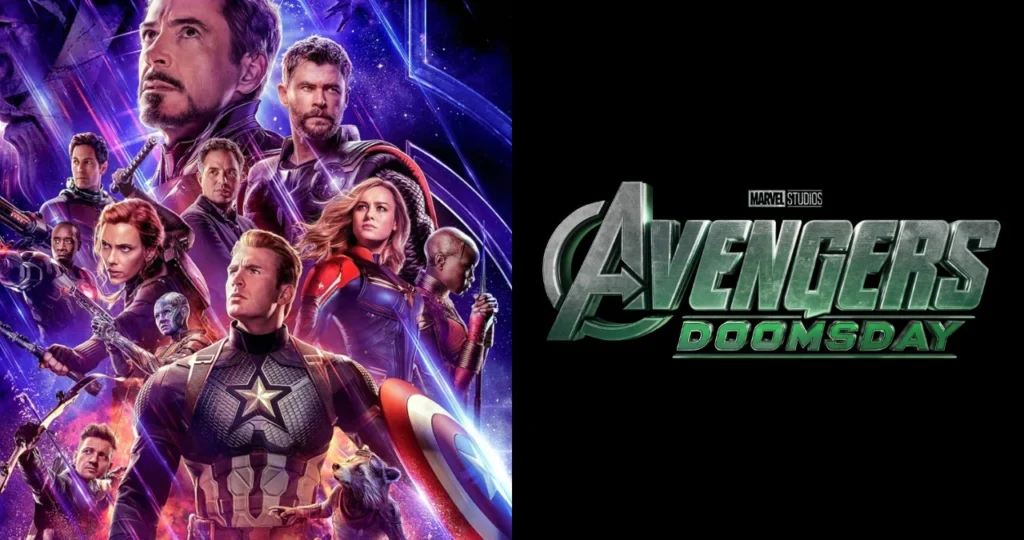
For fans who grew up with the Fox X-Men franchise, seeing Stewart, McKellen, Marsden, Grammer, Romijn and Cumming share the screen with Downey, Evans, Hemsworth, and Pascal will be an experience without precedent in blockbuster cinema. The crossover event to end all crossover events.
FAN THEORIES: WHAT IS DOOM ACTUALLY PLANNING?
Marvel has kept the plot of Avengers: Doomsday under exceptional secrecy — the Russo Brothers have spoken openly about their strategy of filming on closed soundstages and carefully selecting exterior locations to minimise leaks. What we have are fragments: the teaser footage, confirmed cast groupings, and a collection of well-sourced rumours that point toward a story of Multiversal incursion, personal vendettas, and Doom’s ultimate ambition.
Theory #1: Doom as the False Saviour
The most widely circulated and arguably best-sourced theory suggests Doctor Doom will not arrive as an obvious villain. Instead, he presents himself as a hero — a wise ruler from another reality who has come to warn the MCU’s Earth about an imminent catastrophe. He helps the Avengers fight a Multiversal threat. He earns their trust. And then, at the moment of maximum vulnerability, he betrays them. This arc mirrors Doom’s comic history precisely: he is never merely a brute. He is a strategist. He plays the long game. And this face — Tony Stark’s face — is the perfect tool for exactly that deception.
Theory #2: Steve Rogers Caused the Incursion That Made Doom
Reports from The Direct and multiple trade sources suggest Doom’s central grievance is directed at Steve Rogers. When Steve travelled back in time to live with Peggy Carter at the end of Endgame, he created a branched timeline — Earth-828. That timeline’s creation reportedly triggered a Multiversal Incursion that devastated Doom’s reality, potentially killing his family and leaving him scarred. In this reading, Doom’s conquests across the Multiverse are not purely about ambition. They are about preventing the kind of careless timeline-tampering that destroyed his world from happening again. He is not wrong. He is just catastrophically, violently right.
Theory #3: Doom Wants Franklin Richards — and the Multiverse Reset
The Fantastic Four: First Steps’ post-credits scene showed Doom kneeling before Sue and Reed’s young son Franklin Richards — who, in Marvel Comics, is one of the most powerful beings in existence, a reality-warper capable of creating pocket universes. A prevalent theory is that Doom needs Franklin to complete a Multiverse reset — collapsing the damaged multiverse into a single, stable reality that he will then rule. This is directly adapted from the 2015-2016 Secret Wars comic event. If true, Doomsday is the setup, and Secret Wars is the endgame: Doom becomes God.
Theory #4: The Missing Avengers — Doom’s Kills on the Way In
The reported $1 billion budget and the sheer size of the cast has fuelled speculation that Doomsday will not end happily for everyone on that roster. Infinity War killed half the cast. Endgame killed Tony Stark and Black Widow. Doomsday, as the beginning of the final two-part saga, may need to establish Doom’s credibility with genuine, irreversible losses. The identities of any casualties are the film’s most closely guarded secret — but the emotional stakes of the teaser footage (Thor asking for strength to come home to his daughter, Steve cradling a baby) suggest this film is specifically designed to make you care before it makes you grieve.
THE TEASERS: MARVEL’S UNIQUE AND DIVISIVE MARKETING STRATEGY
Marvel’s marketing campaign for Avengers: Doomsday has been unlike anything the studio has attempted before. Rather than a traditional full trailer, the studio released a series of short, character-specific teaser vignettes — each one attached to screenings of Avatar: Fire and Ash over consecutive weekends, beginning on December 19, 2025.
The first teaser confirmed Steve Rogers’ return: Evans walking toward the Endgame house, holding a baby, setting aside his uniform. The second featured Thor praying to Odin, asking for the strength to survive one more battle and return to his daughter Love as “warmth” rather than a warrior. The third focused on the X-Men — most significantly Cyclops firing an optic blast into the sky, which was widely described as the best teaser of the series. The fourth teaser, released with the full Doomsday countdown announcement on December 18, 2025, showed the assembled teams.
The strategy was designed to drive repeat viewings of Fire and Ash by requiring cinema attendance to see each new tease first. The reaction was mixed. Some critics praised the unique “dribbled information” approach as effective hype-building. Others felt the sombre, low-key teasers failed to generate the scale of excitement warranted by the film’s cast and stakes. The stunt clocked 275 million combined views, breaking Marvel’s own livestream records — and the Evans reveal, despite leaking in bootleg form before it could be unveiled in the intended theatrical context, sent the internet into overdrive regardless.
WHAT AVENGERS: DOOMSDAY MEANS FOR THE MCU’S FUTURE
Avengers: Doomsday is not just a film. It is the beginning of the answer to a question the MCU has been avoiding since Endgame: what comes next? The Infinity Saga had a clarity of purpose, an escalating architecture, a clear destination. Phases Four and Five, which introduced dozens of new characters across an expanding slate of Disney+ series and theatrical films, never found an equivalent focus. The Multiverse Saga, without Kang, was a vehicle without a driver.
Doom is the driver. He is the character Marvel Comics has long considered its greatest villain precisely because he is not simply a force of destruction. He has a point of view, a philosophy, and a self-belief so absolute it is genuinely frightening. In the right hands — and the Russo Brothers, McFeely, and Waldron are the right hands — he can carry two films the way Thanos carried Infinity War and Endgame. Not just a threat, but an argument. An argument about order and chaos, about who should make decisions for the universe, about whether the careful, deliberate ambitions of one genius are preferable to the well-meaning but catastrophic mistakes of a thousand scattered heroes.
Steve Rogers went back in time for love, and it may have broken the universe. Reed Richards created a portal, and Doom walked through. The Avengers have saved the world again and again, and every victory has had consequences they didn’t anticipate. Doom arrives to collect.
December 18, 2026. The countdown clock is running. Doom is coming. And this time, the man in the mask knows exactly what he is doing.
Avengers: Doomsday opens exclusively in theaters on December 18, 2026, from Marvel Studios and Walt Disney Studios Motion Pictures. Its sequel, Avengers: Secret Wars, is scheduled for December 17, 2027.
All production details, cast information, and plot theories are current as of March 21, 2026. Subject to change as Marvel releases official information.
Key Takeaways
- Avengers: Doomsday, releasing on December 18, 2026, marks the entry of Doctor Doom into the MCU, played by Robert Downey Jr.
- The film serves as the second in Phase Six and begins the conclusion of the Multiverse Saga after the departure of Kang.
- The narrative explores the consequences of Steve Rogers’ time travel in Endgame, potentially leading to Doom’s motivations.
- Marvel assembles an extraordinary cast, including returning X-Men actors, creating an unprecedented crossover event.
- The marketing strategy involved character-specific teasers, generating significant online buzz and anticipation for the film.
