


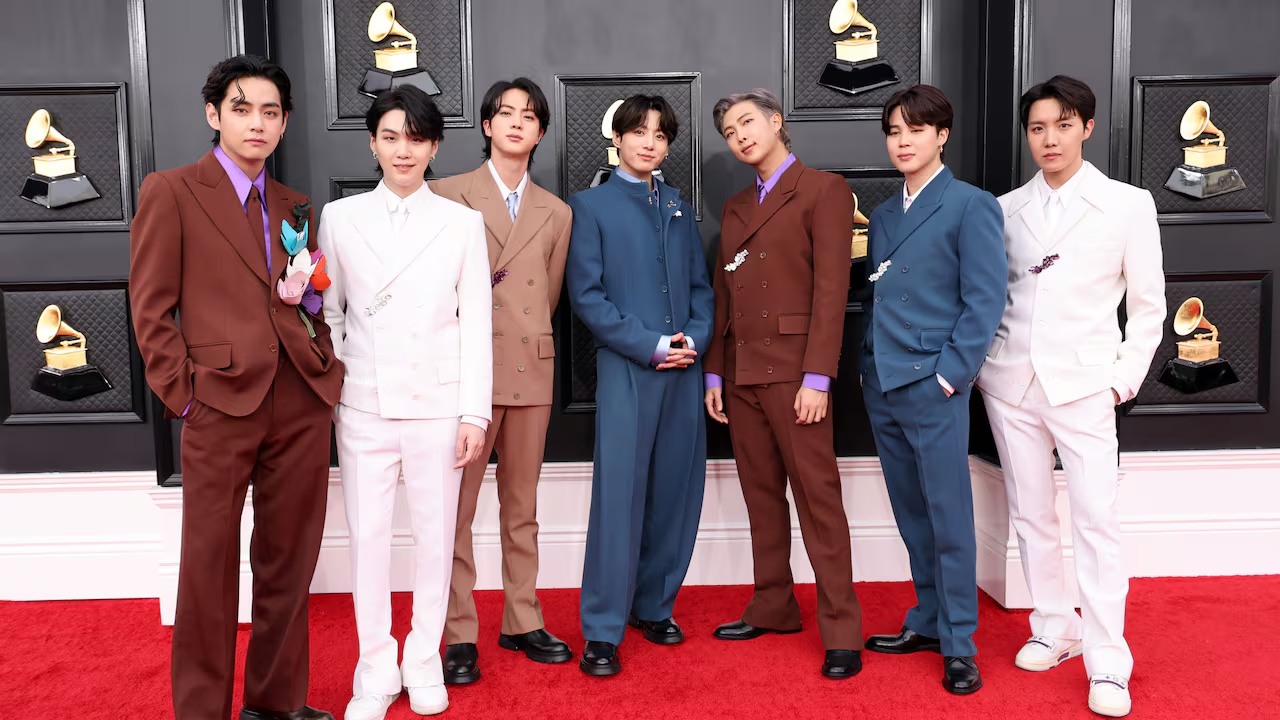
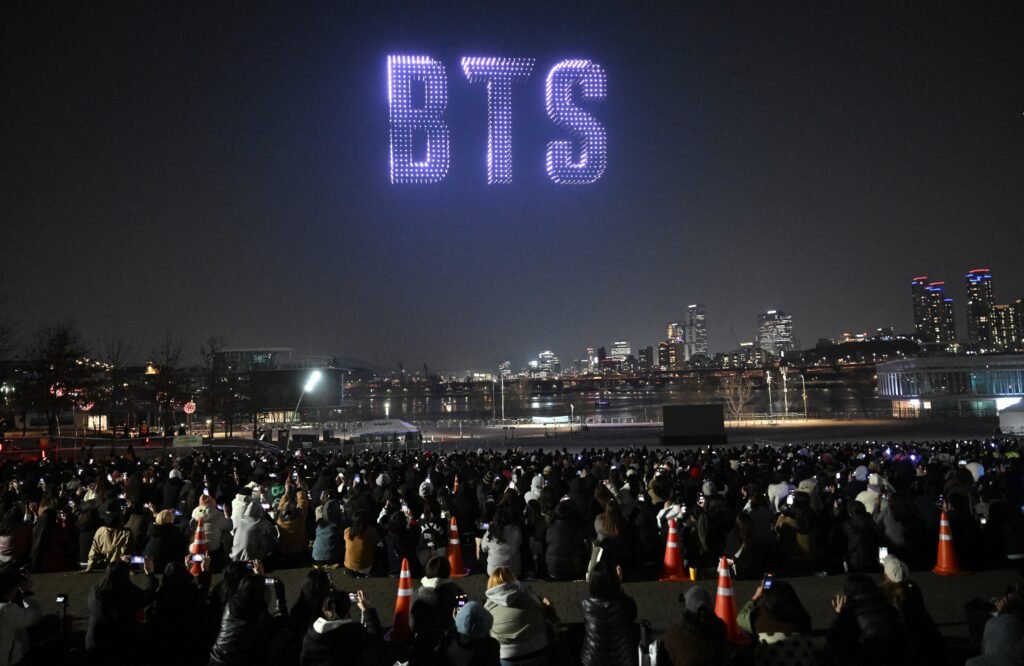
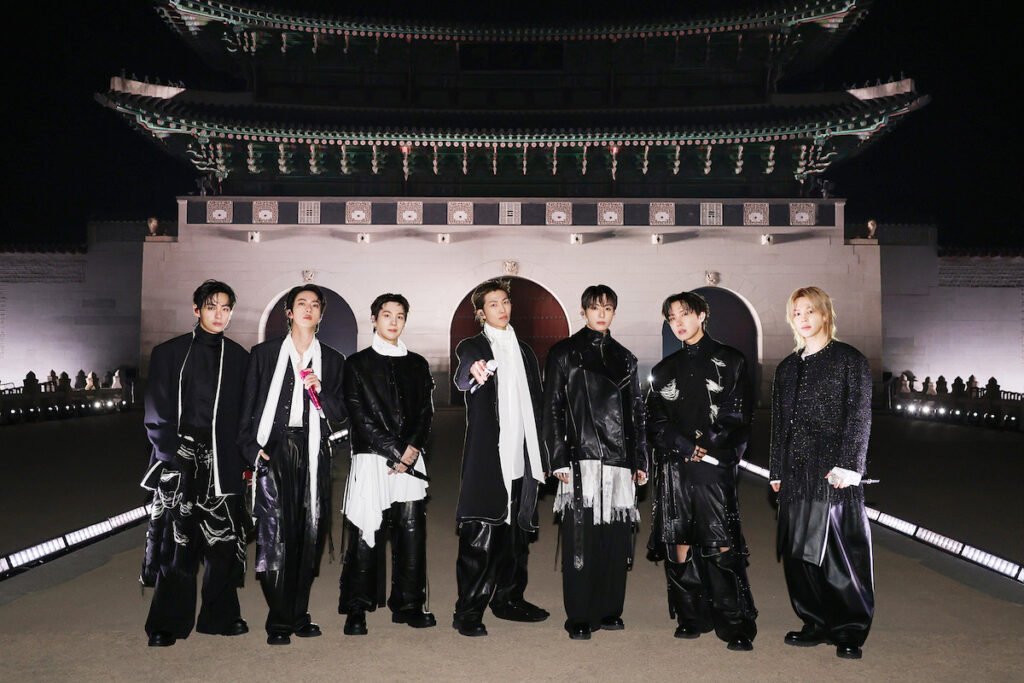
BTS is back — and they chose one of the most meaningful stages in South Korea to prove it. On Saturday night, all seven members of the K-pop phenomenon performed together for the first time in nearly four years, taking the stage at Seoul’s historic Gwanghwamun Square for a free BTS Seoul concert 2026 that drew an estimated 20,000 ticketed fans inside the venue and another 240,000 in the surrounding streets. Millions more tuned in via Netflix’s global livestream.
The BTS 2026 comeback marks the end of a long and much-anticipated hiatus. The group stepped back from touring and recording so that each of its seven South Korean members could fulfill the country’s mandatory military service requirement — a legal obligation that applies to all able-bodied South Korean men. Now, with all members discharged, BTS returns not just to music, but to a global entertainment landscape that has shifted dramatically in their absence.
Their first new album in nearly four years, ARIRANG — named after a beloved centuries-old Korean folk song — served as the musical centerpiece of Saturday’s concert and signals a group that is leaning into its Korean identity more deliberately than ever before.
Why Did BTS Go on Hiatus? The Military Service Explained
For international fans unfamiliar with South Korean law, the BTS hiatus may have seemed sudden. In South Korea, military service is compulsory for men, typically lasting between 18 and 21 months. Given that BTS debuted in 2013 and spent the better part of a decade at the top of global pop music, the question of when — and how — they would fulfill their service obligations had long been a topic of national debate.
South Korean law had previously allowed the government to grant exemptions to athletes and classical musicians who achieved significant international recognition. Whether K-pop artists should qualify for similar treatment became a hotly contested issue, particularly as BTS’s global achievements grew. Ultimately, no broad exemption was granted, and the members enlisted at staggered intervals starting in late 2022, with the last member completing service in early 2026.
The phased military service timeline meant that BTS as a complete, seven-member unit was unavailable for the better part of three and a half years. For a fanbase — known as ARMY — that spans every continent and has sustained one of the most passionate communities in modern music, the wait was significant. Saturday night was their reward.
BTS at Gwanghwamun Square: Why the Venue Matters
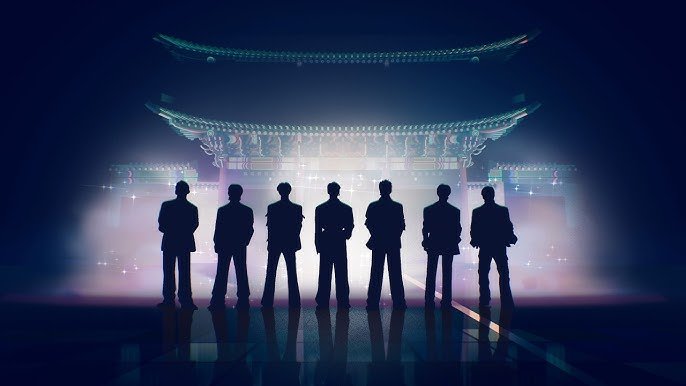
The decision to hold the BTS comeback concert at Gwanghwamun Square was laden with symbolism. Located in the heart of Seoul, the sprawling public plaza sits at the foot of Gyeongbokgung Palace — the grand royal seat of the Joseon dynasty, which governed the Korean peninsula for more than 500 years until its collapse in 1910. The square is flanked by imposing bronze statues of two of Korea’s most revered historical figures: King Sejong, who created the Korean alphabet, Hangul, in 1443, and Admiral Yi Sun-shin, the naval commander who defeated a Japanese invasion in the 16th century.
Pop culture commentator Jung Dukhyun noted that staging the concert at Gwanghwamun was a deliberate statement — a reflection of the belief that traditional Korean culture and authentic local identity can resonate on a global scale. “This isn’t just a concert,” he suggested. “It’s a declaration about where BTS comes from and what Korean culture means to the world.”
Gwanghwamun Square also carries powerful contemporary resonance. When former President Yoon Suk Yeol’s declaration of martial law in late 2024 triggered South Korea’s gravest democratic crisis in decades, it was Gwanghwamun where hundreds of thousands gathered to demand accountability. Those protesters famously waved K-pop light sticks and sang K-pop anthems as acts of collective defiance — a striking illustration of how deeply Korean pop culture has become woven into the country’s civic identity.
South Korean President Lee Jae Myung acknowledged the moment in a post on X, calling BTS “a proud artist of the Republic of Korea” and expressing hope the concert would illuminate “our beautiful cultural heritage and the charm of K-culture” for a global audience.
ARIRANG: What We Know About BTS’s New Album
The title of BTS’s first album in nearly four years is ARIRANG — a word that carries enormous cultural weight in Korea. Arirang is a traditional Korean folk song, or minyo, with roots stretching back hundreds of years. There are dozens of regional variations, but all share a common emotional core: themes of longing, separation, and reunion. It was designated a UNESCO Intangible Cultural Heritage of Humanity in 2012.
For a group returning from a long separation from each other and from their fans, the choice of ARIRANG as an album title feels both poetic and intentional. It speaks to homecoming. It speaks to the kind of longing that can only be resolved by finally coming back together. And it signals that BTS, at this stage of their career, is not chasing Western validation — they are rooting themselves ever more deeply in where they came from.
Details about the album’s full tracklist, producers and musical direction have been kept largely under wraps ahead of Saturday’s concert, with the live performance serving as the world’s formal introduction to the new material.
BTS’s Legacy: How They Changed K-Pop and Global Music
To understand the magnitude of the BTS comeback in 2026, it helps to recall what they achieved before they left. BTS did not merely succeed in Western markets — they rewrote the rules of how those markets could be entered and conquered.
Key milestones in the BTS journey include:
• 2017: BTS became the first K-pop act to win the Billboard Music Awards’ Top Social Artist trophy, ending Justin Bieber’s six-year reign. It was a watershed moment that signaled K-pop’s arrival as a genuine force in Western pop culture.
• 2020: Dynamite became the first song by a South Korean group to debut at number one on the Billboard Hot 100 — a historic achievement that arrived during the peak of the global pandemic and provided a rare moment of collective joy.
• 2021–2022: A string of English-language and bilingual releases kept them at the top of global charts, while their online fanbase — ARMY — became one of the most studied and discussed communities in digital culture.
• 2022 onward: Members began enlisting in the South Korean military, pausing group activities while each pursued solo careers and personal projects.
The group returns to a K-pop landscape that has grown enormously in their absence. KPop Demon Hunters, an American-produced Netflix film centered on a fictional K-pop girl group, became the most-watched film in Netflix history and produced the first K-pop track to win Best Original Song at the Academy Awards. The film’s soundtrack posted four simultaneous Billboard Hot 100 top 10 hits and helped introduce K-pop to an even broader global audience. BTS helped build the infrastructure — the fandom culture, the streaming strategies, the Billboard relationships — that made that kind of crossover possible.
K-Pop’s Global Rise: The Cultural Wave BTS Helped Start
The BTS comeback arrives at a moment of extraordinary momentum for Korean entertainment broadly. Squid Game became a global Netflix phenomenon and cultural touchstone. Parasite made history as the first non-English-language film to win the Academy Award for Best Picture. Maybe Happy Ending became the first Korean musical to win the Tony Award for Best Musical. Taken together, these achievements represent a fundamental shift in how Western audiences — and Western entertainment industry gatekeepers — relate to Korean creative work.
BTS’s role in this transformation cannot be overstated. They were among the first to demonstrate that language was not a barrier to emotional connection, that authenticity could travel across cultures, and that a devoted online community could reshape industry metrics. Every K-pop act that has broken through since has done so in a landscape that BTS helped create.
Their return, then, is not merely a music event. It is a cultural moment — a reunion between a group and a global community that helped build something genuinely new in popular music.
BTS Comeback Concert: Key Facts at a Glance
• Venue: Gwanghwamun Square, Seoul, South Korea
• Date: Saturday, March 21, 2026
• Format: Free concert; approximately 20,000 ticketed attendees inside the square
• Additional viewers: ~240,000 in surrounding streets watching on temporary screens
• Livestream: Netflix global livestream, 7 a.m. ET
• New album: ARIRANG — BTS’s first release in nearly four years
• Duration: Approximately one hour
• Road closures and subway adjustments implemented around Gyeongbokgung Palace area
What’s Next for BTS After Their 2026 Comeback?
Saturday’s Gwanghwamun concert is widely understood to be a beginning, not an end. Industry observers expect a full world tour to follow, along with additional album releases and the kind of sustained promotional campaign that BTS’s previous era — prior to military service — was defined by.
Whether BTS will pick up precisely where they left off, or whether years of individual growth, military experience and a changed global landscape will steer them in a new direction, remains to be seen. The title ARIRANG suggests a group that has done some reflection — that has thought about its roots, its identity, and what it actually wants to say now that all seven members are back in the same room.
For ARMY, the answer to “what’s next” may be simpler: whatever it is, they’ll be there.
BTS members are RM, Jin, Suga, J-Hope, Jimin, V, and Jungkook. All seven members are South Korean nationals who completed mandatory military service between 2022 and early 2026.
