


The nursery rhymes are familiar, but the face in the mirror is not. Where hair once was, there’s now silver—or none at all. Reading glasses perch on noses that once squinted at younger children’s report cards decades ago. Yet here they are again: Hollywood’s oldest new dads, cradling infants, assembling cribs, and discovering that parenthood the second (or third, or eighth) time around carries a weight and wonder entirely its own.
In an industry obsessed with youth, a quiet revolution is unfolding in Beverly Hills nurseries and Malibu playrooms. Award-winning actors, legendary musicians, and cultural icons are embracing fatherhood not in their ambitious twenties or settled thirties, but in their 50s, 60s, 70s—even their 80s. It’s a phenomenon that challenges our assumptions about age, masculinity, and what it means to begin again when most people are winding down.
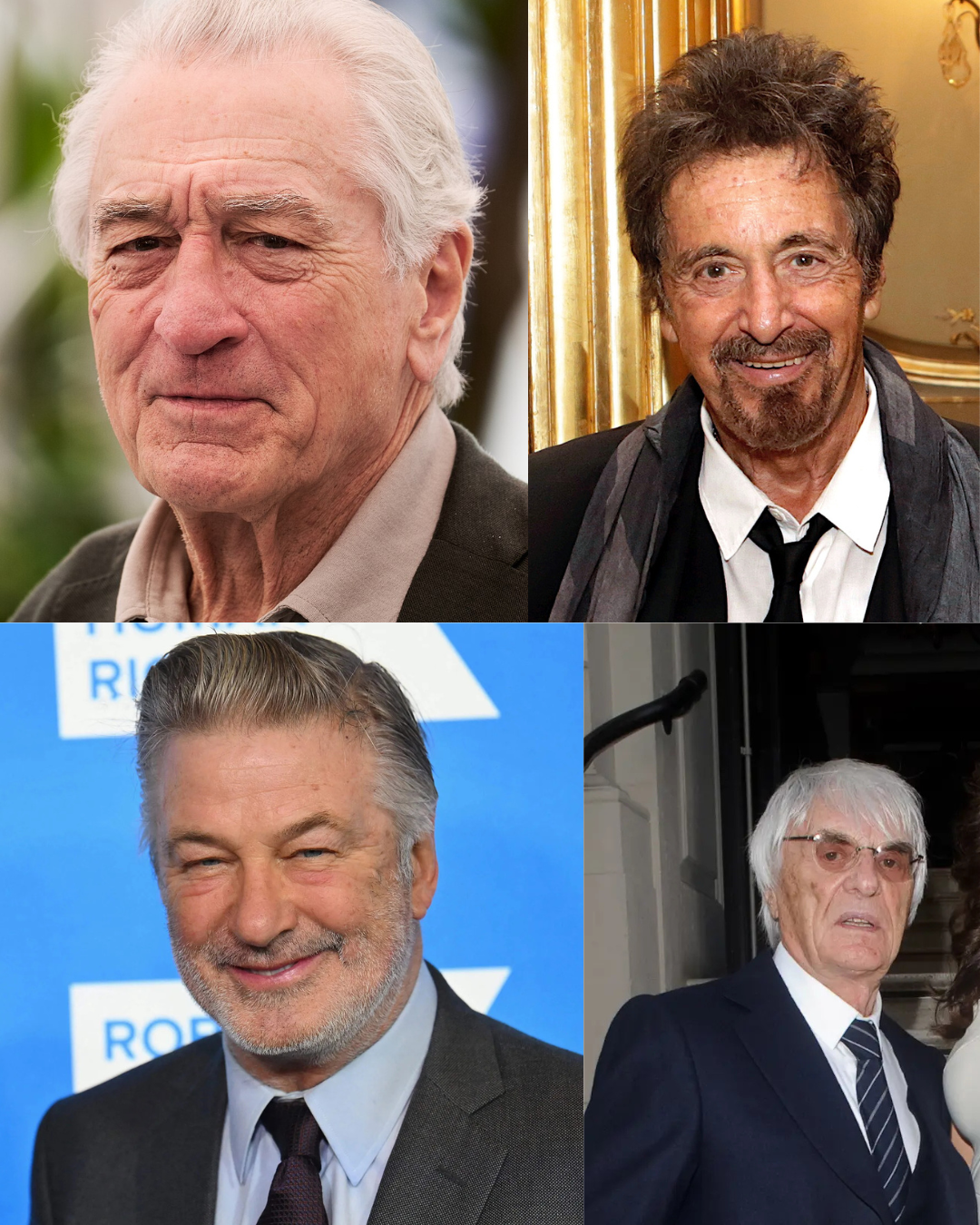
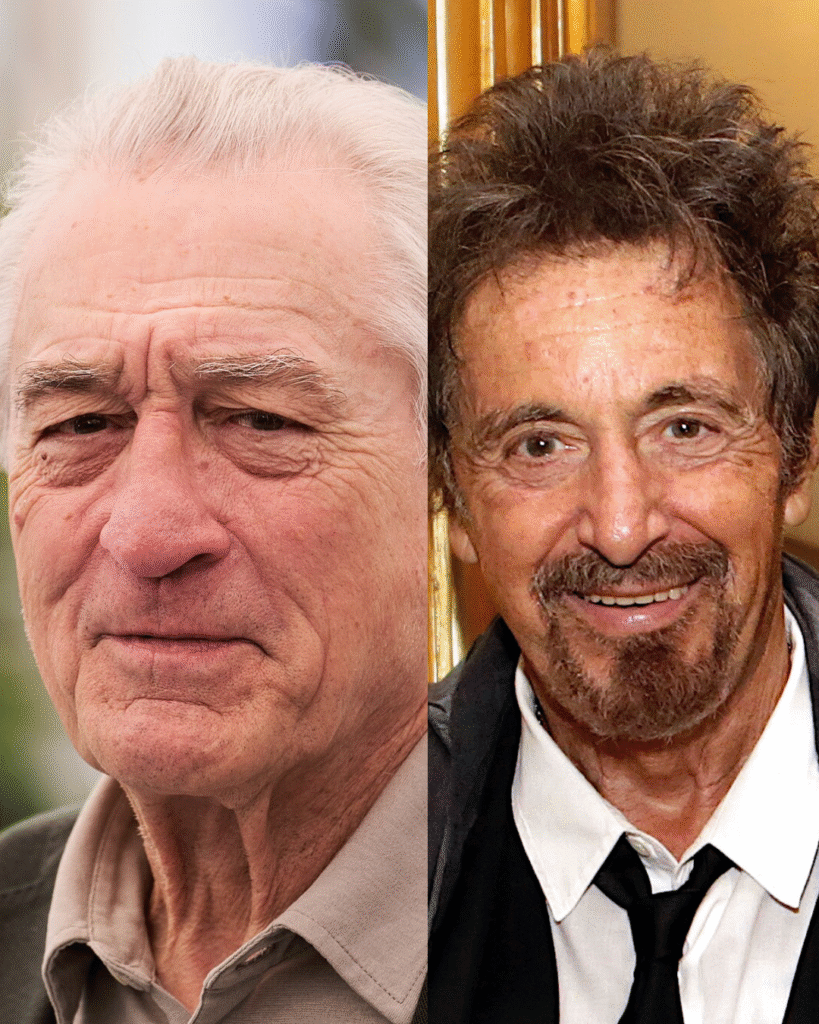
Consider Robert De Niro, who at 79 welcomed his daughter Gia in 2023, more than four decades after becoming a father for the first time. The man who gave us Travis Bickle and Vito Corleone now spends his evenings watching Ms. Rachel and the Wiggles, finding in the simple rhythms of infant care something profound. “She’s such an adorable baby,” he told interviewers, his voice softening in a way that would surprise those who only know his on-screen intensity. “When I look at her, everything else goes away.”
That sense of clarity—of life distilled to its essence—echoes across the experiences of older fathers. Kelsey Grammer, who welcomed his eighth child, Christopher, in 2025 at age 70, has spoken about how later-life parenting became an unexpected portal to redemption. Already raising three young children with wife Kayte Walsh, Grammer discovered that showing up for his youngest gave him a roadmap for reconnecting with his eldest. “I have neglected a couple of the kids in my life, especially the first two,” he acknowledged with the kind of honesty that only comes with age. “I’m trying to make up for a little of it now.”
The Rolling Stones have given us many things over six decades, but perhaps none so surprising as two of rock’s oldest new dads. Mick Jagger was 73 when son Devereaux arrived in 2016, nearly half a century after his first child was born in 1970. His bandmate Ronnie Wood was 68 and already a grandfather of ten when he and wife Sally welcomed twin daughters Alice and Gracie the same year. Jagger later reflected on how the experience had changed him: “You get a bit out of practice—it’s not like riding a bike. The more children you have, the more laissez-faire you get about them, to be honest.”
That laissez-faire quality might be wisdom, or it might be exhaustion. Al Pacino seemed to embody both when, at 82, he became a father for the fourth time with the birth of son Roman in 2023. The Godfather star had already raised three children spanning four decades—daughter Julie born in 1989, twins Anton and Olivia in 2001—making his latest chapter one of Hollywood’s most improbable. Whether he sees it as blessing or cosmic joke, Pacino has kept largely silent, letting his mere presence in delivery rooms octogenarians rarely frequent speak for itself.
Some embrace the incongruity with humor. Will Forte, who welcomed daughters Cecilia and Zoe in his early 50s, calls himself “kind of an old man dad” without apology. His wife once bought him a sweatshirt reading “Dad or Grandpa?” when they were expecting their first. “Most people would probably go, ‘Grandpa! For sure,'” he joked, acknowledging what everyone can see but few will say: older dads occupy a peculiar space where generational lines blur and biology insists on what culture finds awkward.
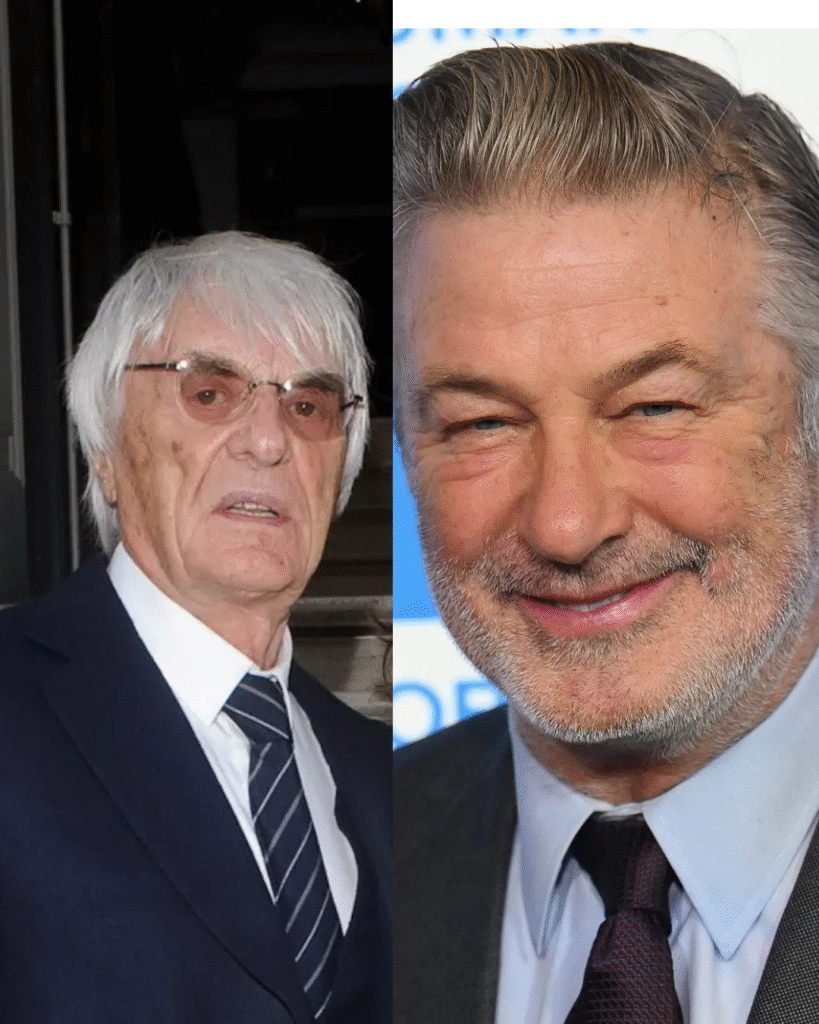
The record for defying those expectations may belong to Bernie Ecclestone, the former Formula 1 chief who became a father at 89 in 2020. His son Ace arrived 65 years after Ecclestone’s eldest daughter Deborah was born in 1955—a span longer than many human lifetimes. At 91, Ecclestone was photographed celebrating his birthday with his wife, his baby son, his daughter, and his granddaughter, a tableau that could serve as either inspiration or cautionary tale, depending on your perspective.
For some, late fatherhood represents not addition but multiplication. Alec Baldwin was already father to adult daughter Ireland when he and wife Hilaria welcomed daughter Carmen in 2013, when he was 55. Six more children have followed, making Baldwin simultaneously a new dad and a grandfather—Ireland gave birth to daughter Holland in 2023. Mel Gibson, who raised seven children in an earlier marriage, became father to his ninth child, son Lars, at 61 in 2017, finding in the chaos of toddlerhood something like redemption after years of personal turmoil.
The motivations are as varied as the men themselves. Steve Martin waited until 67 to become a father for the first time, then promptly restructured his entire professional life around the experience. “I have a family life that’s really fun,” he said. “To film a movie now, to go someplace else to live, I’m not willing to do that anymore. I can’t disappear for three months.” Jeff Goldblum, who welcomed two sons in his early 60s, expressed a different kind of awareness: “I keep doing the math, and keep extrapolating where they’re going to be, and where I’m going to be. And when I buy a watch, I wonder who’s going to get it.”
That mathematical reckoning—the quiet calculation of how many graduations, weddings, grandchildren you might live to see—haunts every older parent, celebrity or otherwise. Hugh Grant, who once seemed congenitally opposed to domesticity, became father to five children between his early and late 50s, finally understanding what he’d been missing. Elton John, who welcomed two sons in his mid-60s, put it most simply: “It makes all the difference because it’s about them, not you. And it’s the greatest thing you’ll ever know.”
The list goes on: Gordon Ramsay at 57, Billy Joel at 71, Paul McCartney at 61, Clint Eastwood at 65, Bruce Willis at 57, Kevin Costner at 54. Each name represents not just a birth announcement but a quiet decision to begin again when the world expects you to be finished. To trade the golf course for the playground, the quiet dinner for the chaotic bedtime, the memoir for the diaper bag.
Critics will point to privilege—nannies, resources, partners often decades younger who shoulder the physical burden. They’re not wrong. Yet something genuine persists beneath the wealth and celebrity. In an industry that devours youth and discards age, these men have chosen presence over legacy, mess over control, vulnerability over the carefully constructed personas that made them famous.
Whether it’s wisdom or folly, second childhood or second chance, Hollywood’s older dads are rewriting the final act. They’re showing up at school drop-offs where they’re mistaken for grandfathers, assembling Lego sets with hands that once held Oscars, and discovering that the role of a lifetime might not be the one that made them famous—but the one that makes them, finally, fully human.
Fatherhood, it turns out, has no expiration date. It only requires showing up, loving deeply, and having the courage—or the foolishness—to begin again.
