


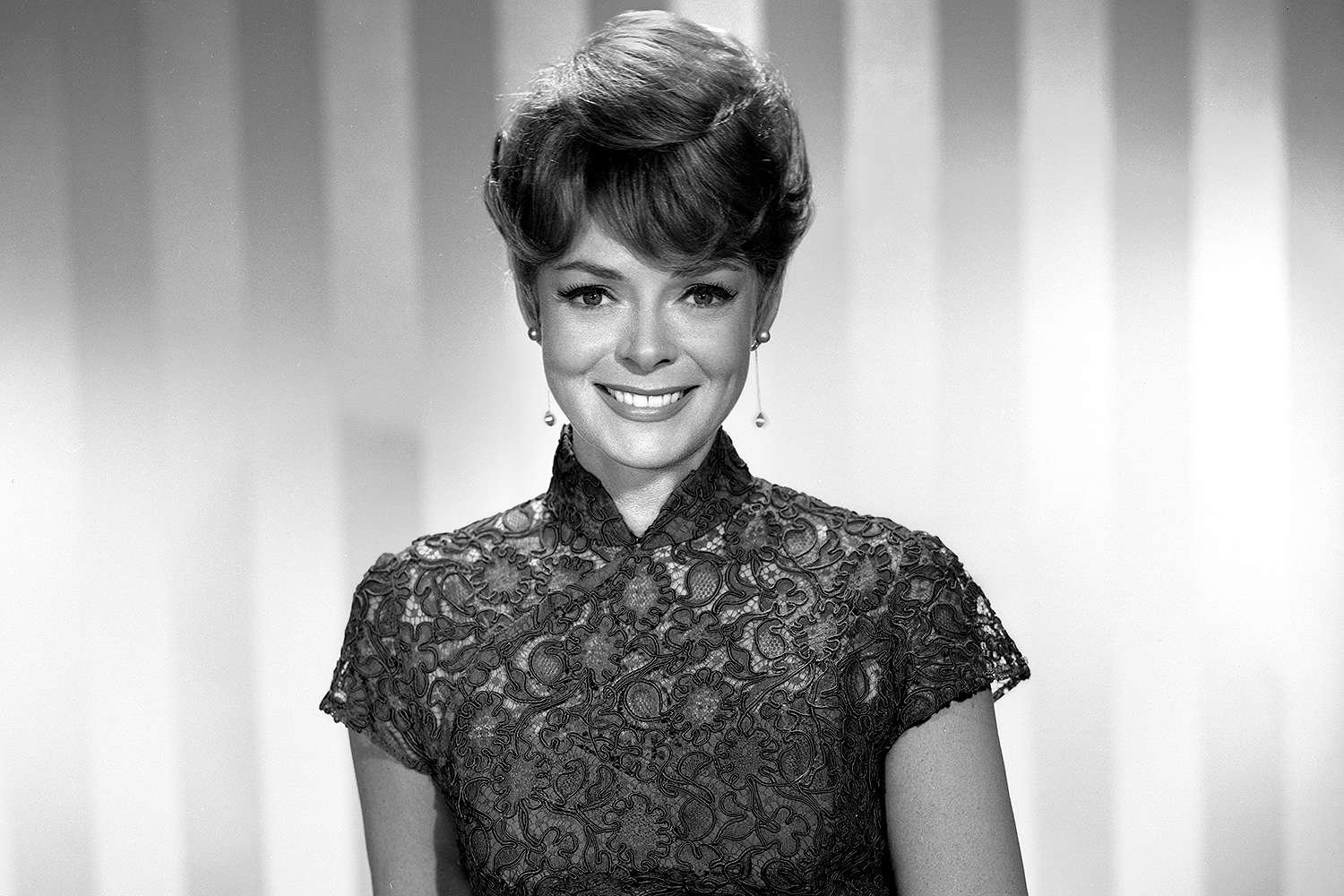
The world has lost one of its most beloved mother figures. June Lockhart, the luminous actress who became America’s television mom for multiple generations—whether comforting orphaned Timmy alongside Lassie or navigating the cosmos as the matriarch of the Robinson family in Lost in Space—passed away Thursday at her home in Santa Monica, California. She was 100 years old.
Lockhart died of natural causes with her daughter June Elizabeth and granddaughter Christianna by her side, her family announced Saturday. Family spokesman Lyle Gregory, a friend of 40 years, shared that “She was very happy up until the very end, reading the New York Times and LA Times everyday. It was very important to her to stay focused on the news of the day.” That sharp mind and insatiable curiosity defined Lockhart throughout her remarkable life—a career that spanned nearly 90 years and made her one of the last surviving actors from Hollywood’s Golden Age.
June Lockhart’s origin story reads like Hollywood legend itself. “Thomas Edison in the early 1920s hired and introduced two young actors to one another, Gene Lockhart and Kathleen Arthur,” Gregory explained. “They performed sketches written by Edison to promote his latest invention, the phonograph, for eager audiences across the emerging modern North American landscape. Those two young actors fell in love, married, had one child and named her June.”
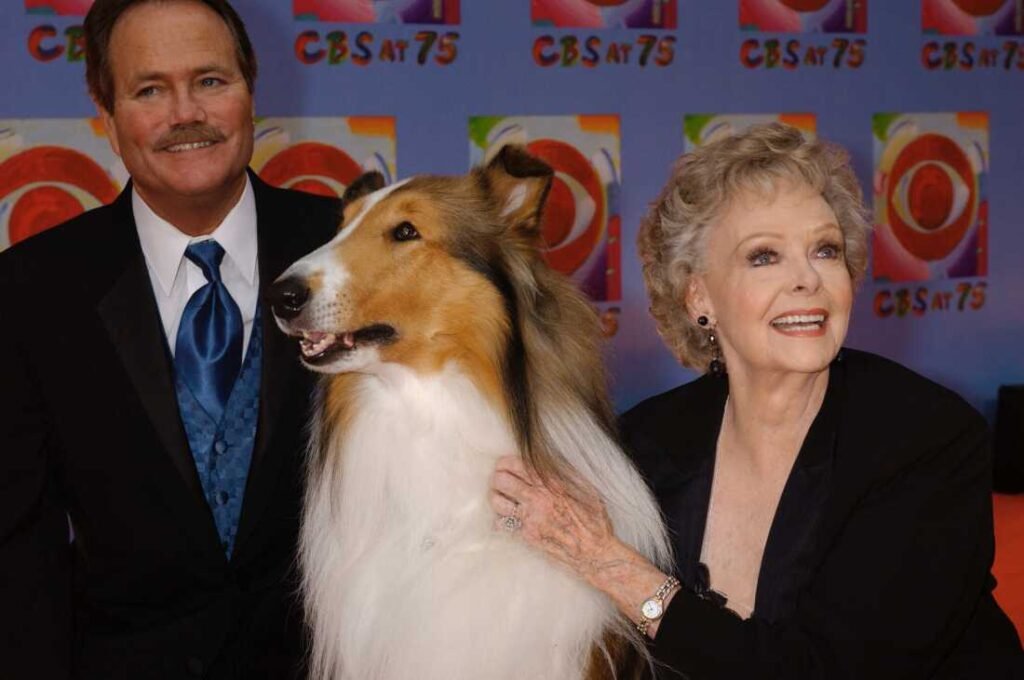
Born in New York City on June 25, 1925, June Lockhart was destined for the stage. She made her professional debut at age 8, playing Mimsey in “Peter Ibbetson” at the Metropolitan Opera House. Her first film role came in 1938 in “A Christmas Carol,” in which her parents—who were both actors, Gene and Kathleen Lockhart—starred. Her father, Gene Lockhart, would become one of Hollywood’s most prolific character actors with over 300 film credits and an Oscar nomination for Algiers in 1939. He was also a founding member of the Screen Actors Guild in the 1930s, a legacy of activism that June would carry forward throughout her own career.
Young June appeared in numerous classic films during Hollywood’s Golden Age, including Meet Me in St. Louis alongside Judy Garland and Margaret O’Brien, Sergeant York with Gary Cooper, All This, and Heaven Too with Bette Davis, and The Yearling. She also starred in the 1945 sequel Son of Lassie, playing the grown-up version of Elizabeth Taylor’s character from the original film—a fitting precursor to her later television fame.
But it was Broadway that first brought Lockhart out of her famous parents’ shadow. In 1947, she made her Broadway bow playing the ingénue in the comedy “For Love or Money” with John Loder. She got a standing ovation on opening night; one critic compared her debut to the first big hits of Helen Hayes and Margaret Sullavan. The overnight toast of Broadway, she went on to win a Tony Award, the Donaldson Award, the Theatre World Award and the Associated Press citation for Woman of the Year for Drama. She won an Antoinette Perry Award, which would later become the Tony Award, for “best newcomer” after her Broadway performance in “For Love or Money” in 1947. Lockhart donated her Tony Award to the Smithsonian Institution in 2008 for display in the museum’s permanent entertainment collection. She was just 22 years old when she achieved this remarkable success.
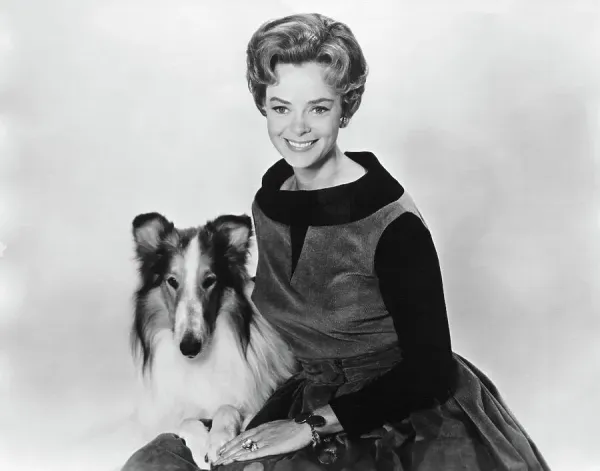
When her adult film career began to wane in the 1950s, Lockhart transitioned to television—and television audiences fell in love. From 1958 to 1964, she portrayed Ruth Martin in the iconic CBS series Lassie, becoming the third actress to play the maternal role after Jan Clayton and Cloris Leachman. As Ruth Martin, she raised the orphaned Timmy (Jon Provost) with warmth and wisdom, creating one of television’s most enduring mother figures.
Lockhart spoke candidly and with humor about her famous canine co-star. “I worked with four Lassies,” she revealed in a 1989 interview. “There was only one main Lassie at a time. Then there was a dog that did the running, a dog that did the fighting, and a dog that was a stand-in, because only humans can work 14 hours a day without needing a nap. Lassie was not especially friendly with anybody. Lassie was wholly concentrated on the trainers.” She also disclosed that Lassie was actually male, explaining that “male collies are bigger, the ruff is bigger, they’re more imposing looking.”
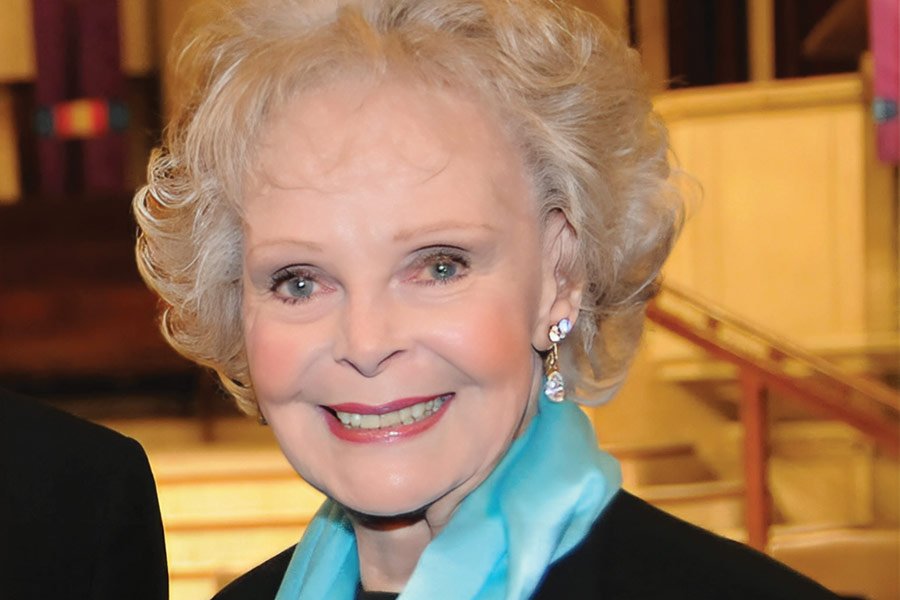
After six years on a rural farm with Lassie, Lockhart embarked on an entirely different adventure: outer space. From 1965 to 1968, she starred as Dr. Maureen Robinson in Lost in Space, the wise and reassuring mother aboard the Jupiter II spacecraft. The campy CBS series saw the Robinson family bouncing from planet to planet after their mission was sabotaged by the nefarious Dr. Zachary Smith (Jonathan Harris), encountering bizarre creatures and weekly cliffhangers that kept audiences coming back. “It was like going to work at Disneyland every day,” Lockhart said of the experience.
In a 2004 NPR interview, Lockhart joked about how one of the most famous “Lost in Space” episodes—”The Great Vegetable Rebellion”—came to be. “The vegetable rebellion was absolutely the ultimate episode. It was in our third year, and it was written by a man named Peter Packer. And he said to me when I last saw him, he said: I had simply run out of ideas.”
Her Lost in Space co-stars paid beautiful tributes to their television mother. Angela Cartwright, who played her daughter, posted on Facebook: “So smart, quick, and funny — she filled her 100 years with curiosity, laughter, and rock ‘n’ roll. I can only imagine she’s feeling right at home as she steps off this planet and into the stars.” Bill Mumy, who played her son on the show, posted on social media: “A one of a kind, talented, nurturing, adventurous, and non compromising Lady. She did it her way. June will always be one of my very favorite moms.”
Offscreen, Lockhart was adamant that she bore little resemblance to the wholesome mothers she portrayed. “I must quote Dan Rather,” she said in a 1994 interview. “I can control my reputation, but not my image, because my image is how you see me. I love rock ‘n’ roll and going to the concerts. I have driven Army tanks and flown in hot air balloons. And I go plane-gliding—the ones with no motors. I do a lot of things that don’t go with my image.”
Lockhart embraced rock music and listened to emerging rock bands. Her Lost in Space co-star Bill Mumy stated that she took Angela Cartwright and him to the Whisky a Go Go nightclub in Hollywood “to hang out with the Allman Brothers Band”. Appearing on The Virginia Graham Show in 1970 with Art Metrano and LGBT cleric Troy Perry, Lockhart confronted Graham about her moralizing tone toward gay people—a courageous stand during an era when such advocacy could damage a career.
Lockhart was long a proponent of NASA and its mission, and she appeared with pioneering moon-walking astronauts Neil Armstrong and Buzz Aldrin when NASA Television won a primetime Emmy Award. NASA honored Lockhart’s impact on space exploration by awarding her the Exceptional Public Achievement Medal in a 2013 ceremony at Jet Propulsion Laboratory in Pasadena. The award is given to non-government individuals who have made significant public contributions to NASA throughout their career. “She cherished playing her role in ‘Lost in Space’ and she was delighted to know that she inspired many future astronauts, as they would remind her on visits to NASA,” her daughter June Elizabeth said. “That meant even more to her than the hundreds of television and movies roles she played.”
Her father had written the lyrics to the 1919 ballad “The World Is Waiting for the Sunrise,” and after Lockhart brought it to NASA’s attention in 1992, the agency used the song to wake the crew of the Columbia Space Shuttle each day. “Mommy always considered acting as her craft, her vocation, but her true passions were journalism, politics, science and NASA,” her daughter June said in a statement. Gregory confirmed: “Her true passion was journalism. She loved going to the White House briefing rooms.”
Beyond her screen work, Lockhart was a passionate defender of animal rights. She supported the Santa Monica Mounted Police Horses and was the national spokesperson for International Hearing Dog Inc. “Her heart belonged to her grand-Pug Massimo, who was always nearby, and a great source of entertainment,” her family said. Influenced by her father’s work with the Screen Actors Guild, June got involved with the American Federation of Radio Artists (later AFTRA) and The Screen Actors Guild, and was awarded The Founders Award in 2018.
Lockhart remained remarkably active throughout her later years, appearing in recurring roles on General Hospital, Knots Landing, The Colbys, and joining Petticoat Junction for its final two seasons as Dr. Janet Craig. She was awarded 2 Stars on the Hollywood Walk of Fame—for Motion Pictures at 6323 Hollywood Boulevard and for Television at 6362 Hollywood Boulevard in Hollywood, California.
Throughout her extraordinary career, Lockhart maintained a remarkable perspective on her legacy. Even though she sometimes mocked Lassie and the wholesome image it created, she ultimately conceded with grace: “How wonderful that in a career there is one role for which you are known. Many actors work all their lives and never have one part that is really theirs.”
For millions of baby boomers and beyond, June Lockhart will always be more than just “one part”—she was the kind, patient, understanding mother figure they wished they had, whether she was serving dinner on a farm or “space pie” aboard a starship. Her warm portrayals endeared her to young viewers who, decades later, flocked to nostalgia conventions to meet her and express their gratitude.
On June 25, 2025, Lockhart turned 100 years old. Just four months later, she has left us, but her legacy endures in every rerun, every streaming episode, and in the hearts of everyone who grew up feeling comforted by her presence on their television screens.
June Lockhart lived a century filled with curiosity, laughter, rock ‘n’ roll, and an unwavering commitment to making the world a little bit kinder. As Angela Cartwright so beautifully put it, one can only imagine she’s feeling right at home as she steps off this planet and into the stars—where, perhaps, Dr. Maureen Robinson always belonged.
Services will be private. In lieu of flowers, the family suggests donations to The Actors Fund, ProPublica, or International Hearing Dog Inc.
Rest in peace to a true legend, a trailblazer, and America’s eternal mom. You will be deeply missed.

1 Comment
Pingback: Project Hail Mary Movie 2026 What to Expect - Glitterica %